
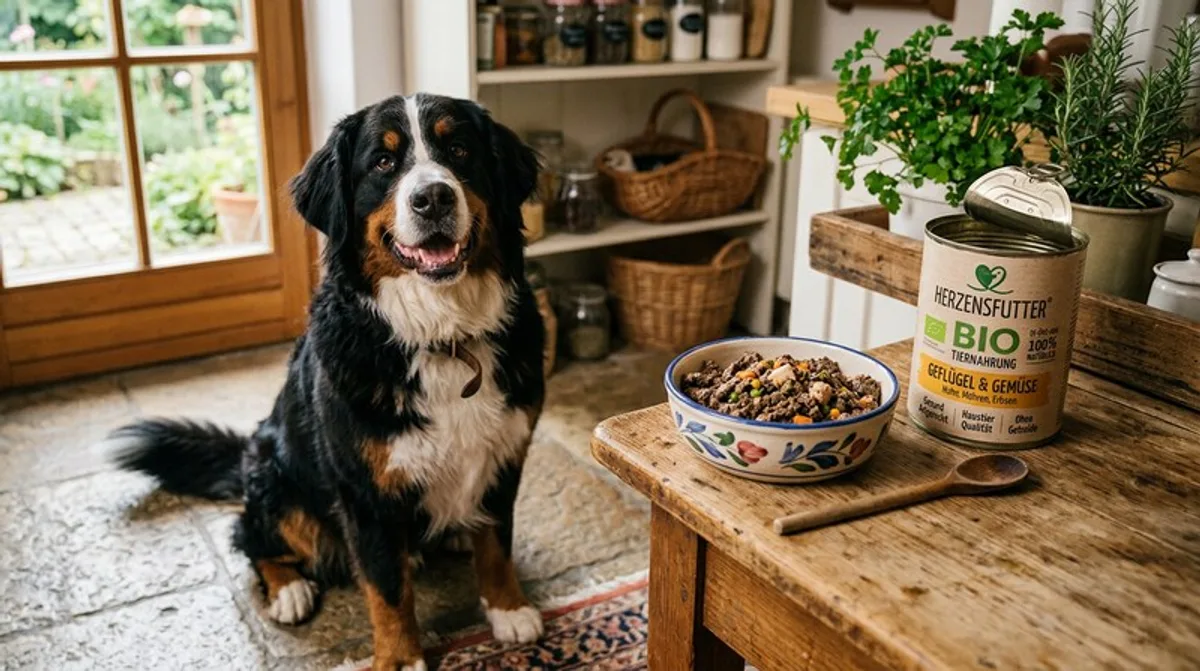
Organic Pet Food: Healthy, Sustainable & Affordable
Healthy nutrition is important for our beloved pets. Find the best deals on organic pet food now and support sustainable production.
Your furry companion deserves only the best! But what does that really mean when it comes to pet food? More and more pet owners are looking for alternatives to conventional pet food and value organic quality, healthy ingredients, and sustainable production. In this blog post, you'll learn everything you need to know about organic pet food – from the benefits to clever money-saving tips.
What You Should Know
Organic pet food is more than just a trend. It's a sign of responsible resource management and a conscious decision for the health of your pet. But what's the difference between organic pet food and conventional pet food? The main difference lies in the origin of the ingredients and the production methods. Organic pet food uses ingredients exclusively from organic farming. This means they were grown without synthetic pesticides, chemical fertilizers, and genetically modified organisms (GMOs). The animal husbandry of the animals from which meat and eggs come must also comply with strict organic guidelines – plenty of space, species-appropriate activities, and a healthy diet are a matter of course.
Another important aspect is the quality of the ingredients. Organic pet food often contains a higher proportion of natural vitamins, minerals, and antioxidants, which are essential for the health and well-being of your pet. A strong immune system, healthy digestion, and a shiny coat are just some of the positive effects of a balanced organic diet.
It's important to understand that "organic" is a protected designation. Only products certified by a recognized inspection body can be labeled as "organic." So, when buying, look for the EU organic seal or a comparable national seal. This guarantees that the strict organic guidelines have been followed.
- Pay attention to certification: Look for the EU organic seal or another recognized organic seal.
- Check ingredients: Carefully read the ingredient list. Avoid products with artificial colors, flavors, and preservatives.
- Species-appropriate: Make sure the food meets the specific needs of your pet's species and age.
- Research origin: Find out about the manufacturer and their production methods.
- Exclude allergies: Pay attention to possible allergens if your pet is sensitive.
Practical Tips
The transition to organic pet food should be slow and gradual to avoid digestive problems. Initially, mix small amounts of the new food with the usual food and gradually increase the proportion over several days. Observe your pet closely to see how it reacts to the new diet. Many...