
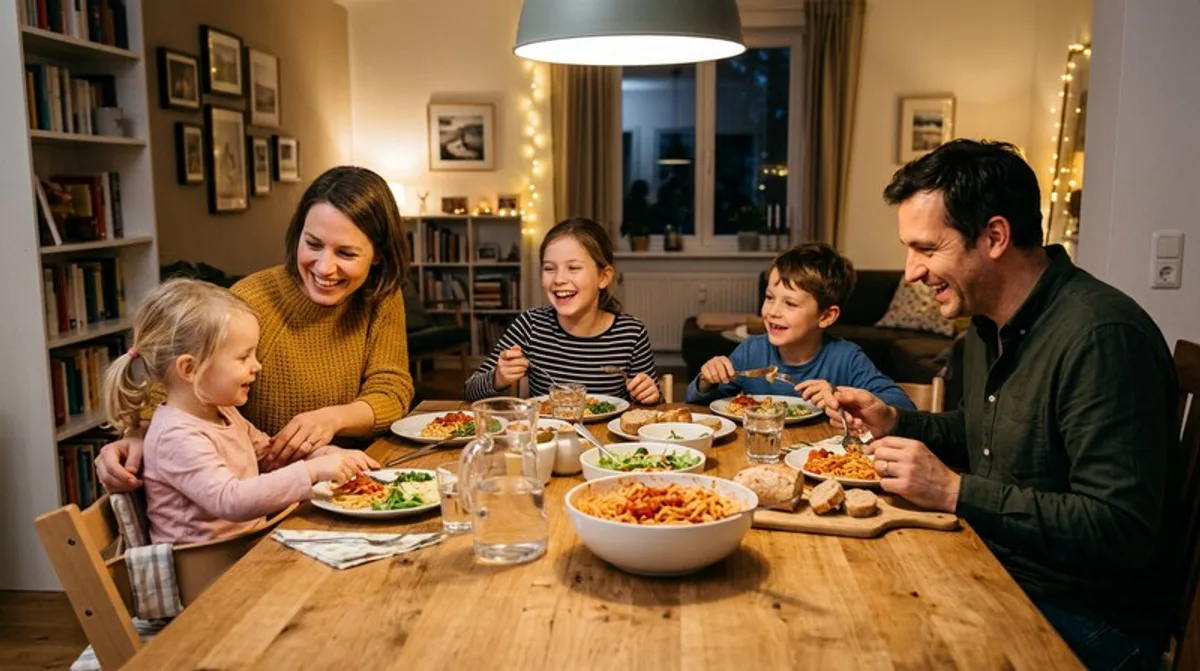
The Dining Table: Family Time, Dinners & Kids
The dining table is more than just a piece of furniture – it's the heart of the family! Here, we share ideas for cozy dinners with kids and practical tips for choosing the right one.
The dining table – more than just a piece of furniture. It's the central hub of the family, the place for shared meals, heartfelt conversations, and unforgettable moments. Especially in our fast-paced time, when everyone is pursuing their own path, it's more important than ever to nurture and maintain this island of peace and connection.
What You Should Know
The dining table is the heart of many families. It's the place where we gather to eat, laugh, and share. Family dinners are a valuable tradition that offers many benefits. Children learn table manners, develop an awareness of healthy eating, and strengthen their bond with their parents and siblings. Studies show that children who regularly eat at the family table perform better in school and are less prone to behavioral problems. But it's not just about upbringing; it's also about the opportunity to simply unwind and reflect on the day. An informal exchange about the day's experiences can clear up misunderstandings and promote family harmony. Even though it's not always easy to keep the kids at the table, it's worth persevering.
Choosing the right dining table is essential. It should not only visually match the decor but also be functional. Pay attention to the size: enough space for all family members is a must. The shape of the table – round, square, oval – influences conversation and the feeling of connection. A round table promotes interaction, while a square table is more suitable for formal occasions. The height of the table also plays a role – it should be comfortable so that everyone can eat relaxed. And finally: the material! Solid wood radiates warmth and security, glass looks modern and light, and artificial stone is easy to care for and robust. The right choice depends on your personal preferences and your family's lifestyle.
- Establish Routines: Set a fixed time for dinner.
- Screen-Free Zone: Cell phones and tablets don't belong at the table.
- Offer Conversation Starters: Ask questions that encourage storytelling (“What was the most exciting thing today?”).
- Involve Children: Let the children help with cooking and setting the table.
- Be Flexible: Sometimes it's okay to eat on the sofa – the main thing is that you're together.
Practical Tips
It's not always easy to make family dinners a routine. Especially with young children, it can quickly become chaotic. Here are a few tips on how to positively influence the family dining experience:
- Seasonal Dishes: Offer dishes that are in season. That makes