
Resistance Bands: Booty Bands, Resistance Bands & More
Resistance bands are versatile fitness accessories for your workout. We'll show you the different types, their benefits, and where to find them at great prices.
Resistance bands are no longer a secret tip. Whether as a Booty band for your glutes, a resistance band for strength training, or a loop band for rehabilitation – these little helpers are incredibly versatile and offer an effective way to spice up your workout. In this blog post, you'll learn everything you need to know about resistance bands, their different types, and their applications, so you can get the most out of your workout.
What You Should Know
The variety of resistance bands can be confusing at first. Let's take a closer look at the most common types: Booty bands, resistance bands, training bands, loop bands, gym bands – what's behind them and what's the difference?
- Booty band: Booty bands are usually wide, flat rubber bands that are placed around the thighs. They are specifically designed to activate and shape the glute muscles. They are perfect for exercises like hip thrusts, donkey kicks, or glute bridges.
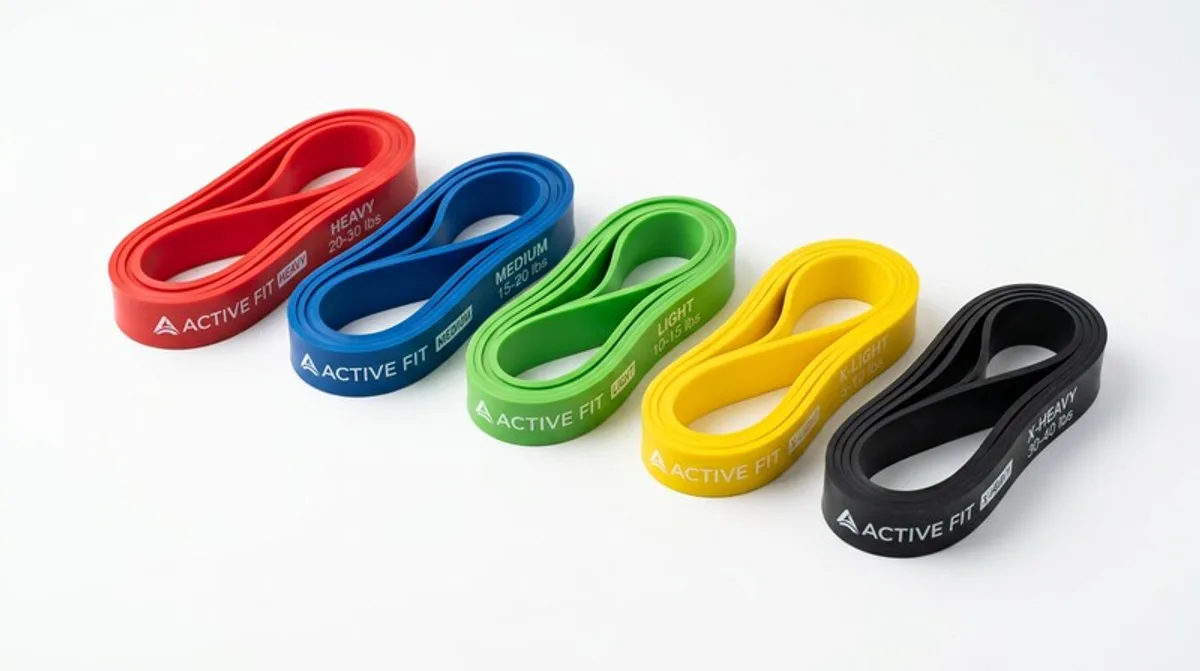
- Resistance band (also training band): These bands come in various strengths and widths. They are ideal for comprehensive strength training, as they increase the resistance during movements and challenge the muscles.
- Loop band: Loop bands are usually thinner and more elastic than resistance bands. They are excellent for dynamic exercises and for activating specific muscle groups, especially in the lower body.
- Gym band: This term is often used synonymously with resistance band, but can also refer to more specialized bands with handles or other attachment options.
- Sport band: A broader term that covers all types of rubber bands for sports activities.
The strength of the individual band is crucial for training success. Beginners should start with light resistance and gradually increase. Make sure the band doesn't slip or get pinched to avoid injuries. The quality of the material also plays an important role. Cheap bands tear quickly, while high-quality bands are more durable and offer consistent resistance.
Applications: Resistance bands are not only suitable for muscle building. They are also used in rehabilitation and physiotherapy. The bands support movements and help strengthen muscles gently. They are also excellent for functional training, as they mimic natural movement patterns and strengthen the core.
Practical Tips
To get the most out of your resistance bands, here are a few practical tips:
- Choose the right strength: Start with a band that challenges you but doesn't overwhelm you. You should be able to perform the exercise cleanly.
- Combine different bands