
Installing Tile in Your Bathroom: Costs, Tips & Finding a Contractor
Bathroom tile should be perfect – but tiling can be tricky. We'll show you what to look out for and how to find the best contractor to realize your bathroom project.
The bathroom is a retreat, a place of relaxation and refreshment. An important element in creating this ambiance is tile. Whether classic, modern, or rustic – the right tile selection and professional installation can significantly influence the character of your bathroom. However, tiling in the bathroom is more than just gluing – it requires expertise and care. In this article, you'll learn everything you need to know, from costs to preparation to finding the right contractor.
What You Should Know
Installing tile in the bathroom is not an easy task. Moisture, temperature fluctuations, and the requirements for slip resistance place special demands on the materials and execution. There are different types of tiles suitable for wet areas: ceramic, stoneware, natural stone, and mosaic. Each type has its advantages and disadvantages in terms of price, appearance, and maintenance. Choosing the right adhesive is as important as selecting the tiles themselves. Make sure to use an adhesive that is suitable for wet areas and meets the manufacturers' requirements.
Before you even begin tiling, thorough preparation is essential. The substrate must be level, clean, dry, and load-bearing. Unevenness must be leveled, loose parts removed, and the substrate cleaned. Sealing is essential in the bathroom to prevent moisture from penetrating the building fabric. This is particularly important with shower enclosures and in areas with direct water contact. Proper sealing is often the difference between a bathroom that lasts a long time and one that suffers from moisture problems.
Practical Tips
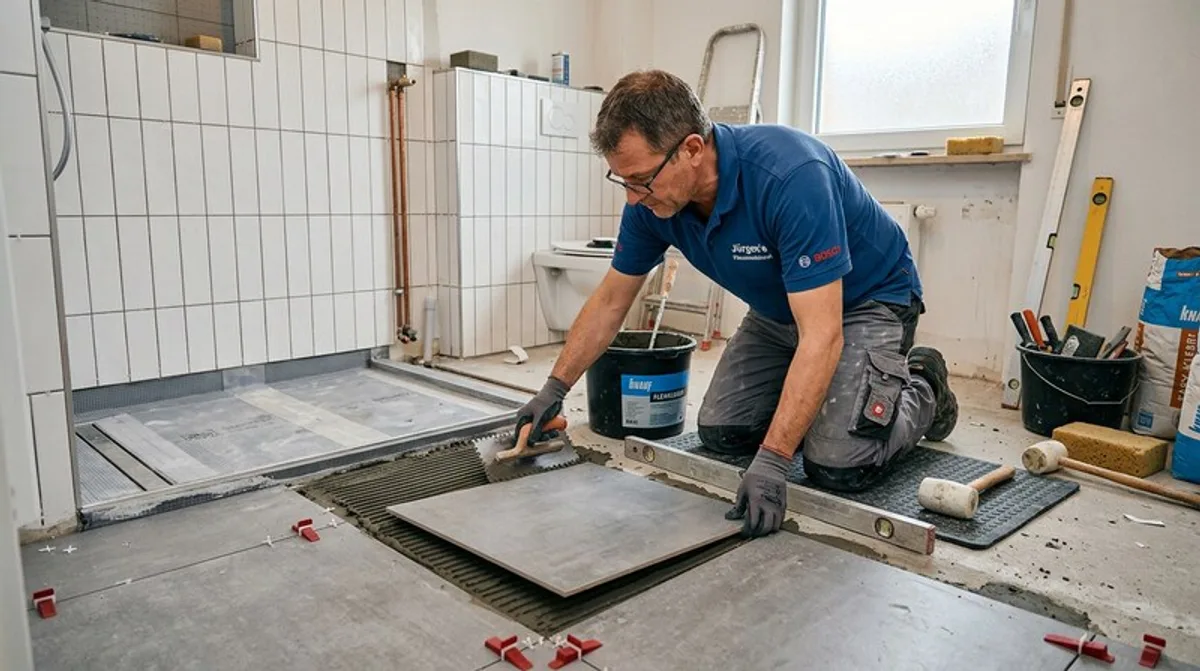
Even though the work seems complex, there are some tips that can help you make tiling in the bathroom a success. Start with the planning: determine the pattern, calculate the material requirements, and consider waste. Pay attention to the alignment of the tiles – a clean alignment ensures a professional result. Use the right tools: a level, a tile square, a trowel, and a rubber mallet are essential. Take your time and work carefully. Good preparation and precise work pay off.
A common mistake is