
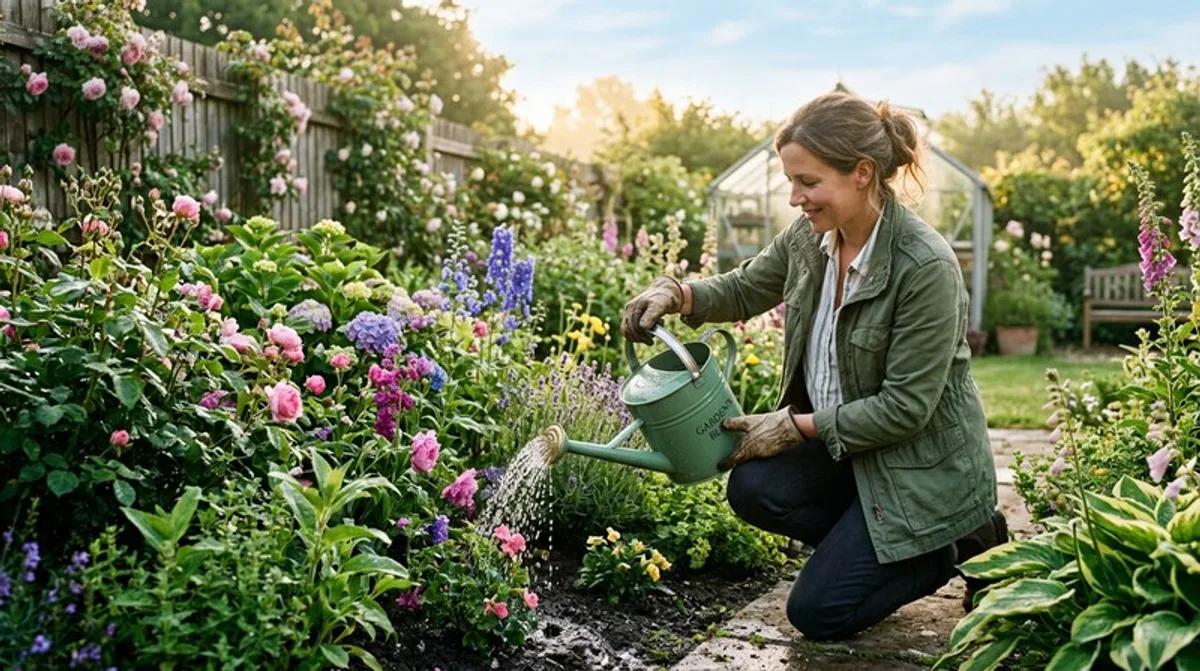
Watering Cans & Plants: Deals for Garden & Tomorrow
Spring is calling you to the garden! Find the best deals now on watering cans, plants, and everything you need for a flourishing tomorrow.
The scent of freshly watered earth, the gentle rustling of leaves in the wind – there's hardly anything nicer than standing in a lush garden. But a flourishing garden needs care, and the watering can plays a central role in that. In this post, we'll show you how to optimally care for your plants, what to consider when watering, and how to save money cleverly, so your garden will shine even more beautifully tomorrow!
What you should know
Watering is more than just putting water on plants. It's a process that depends on many factors. Too much or too little water can harm your plants, so it's important to find the right balance. The needs of your plants vary greatly: sun-loving lavender bushes need less water than moisture-loving ferns. The type of soil also plays a role – sandy soil dries out faster than clay soil.
Choosing the right watering can is also important. They come in many shapes and sizes, made of different materials such as plastic, stainless steel, or copper. A watering can with a long, narrow spout allows for targeted watering directly to the roots, while a wider spout provides more even water distribution. Also, pay attention to the weight of the empty watering can, especially if you often have to carry it.
Practical tips
Many hobby gardeners make similar mistakes when watering. A common mistake is superficial watering, which only moistens the top layers of soil. It's better to water less often, but more thoroughly, so that the water also reaches the deeper roots. A trick to improve the water permeability of the soil is to mix in compost or sand. This is especially true for clay soil.
The way you water can also make a difference. A gentle stream of water is gentler on plants than a strong stream that stirs up the soil and can damage the roots. Balcony boxes and pots are suitable for a small