
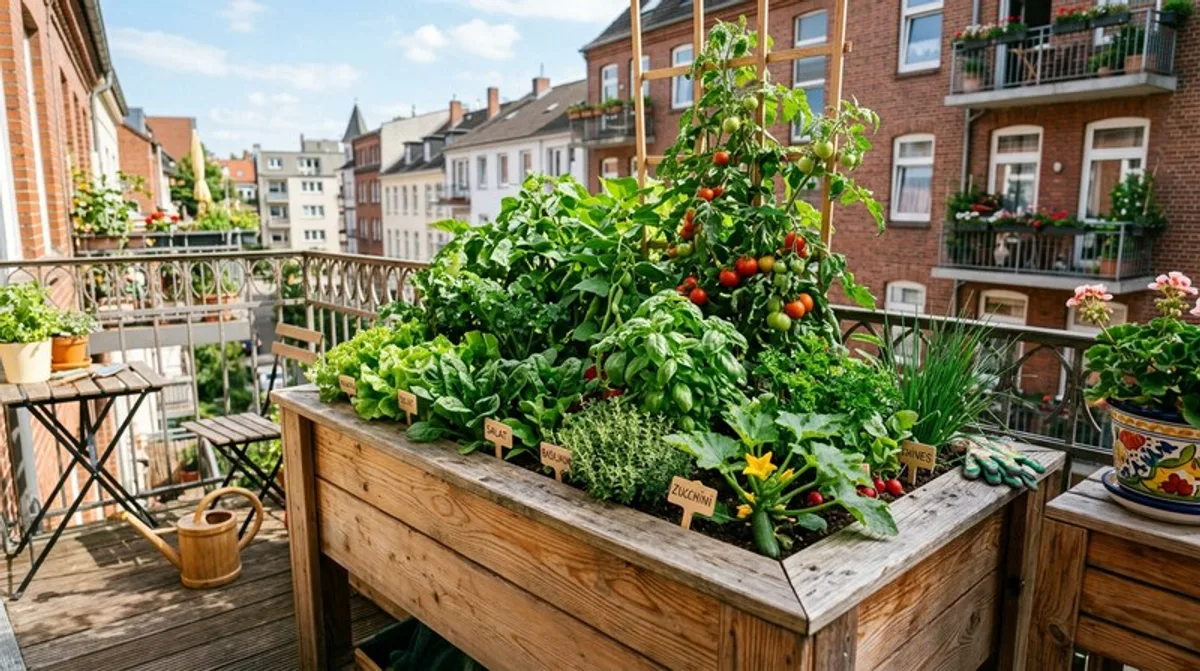
Raised Garden Beds Wood: Growing Vegetables on Balcony & Terrace
Wooden raised garden beds are perfect for balconies and small gardens. We'll show you how to build your own raised bed and plant it with delicious vegetables.
The trend is unstoppable: More and more people crave fresh, homegrown vegetables. But having a garden isn't the only way to benefit. You can also create a green paradise and harvest delicious vegetables on your balcony or terrace with a wooden raised garden bed. In this blog post, we'll show you how to build or buy your own wooden raised bed, which plants are particularly well-suited for it, and how to save money in the process.
What You Should Know
A wooden raised garden bed is more than just a nice decorative element. It offers numerous advantages over growing in pots or directly in the ground. The increased height saves you from strenuous bending, which protects your back. In addition, the soil in the raised bed warms up faster, which accelerates the start of vegetation. And not least, drainage improves, which is particularly important on balconies with little space and often poorly permeable ground. The height of the raised bed also allows you better control over weeds and pests. Before you start, however, you should consider a few important points:
- Location Selection: Your wooden raised garden bed needs at least six hours of sunlight per day. Make sure it has a level surface and sufficient space for watering and harvesting.
- Size and Shape: The size depends on your space and requirements. A raised bed with a width of 80-120 cm (31-47 inches) and a height of 60-80 cm (24-31 inches) is a good compromise between planting area and reachability. The shape is also a matter of taste: Rectangular, square, or even hexagonal – let your creativity run wild!
- Wood Type: Larches, Douglas fir, or locust are particularly durable and resistant to weathering. Make sure the wood is suitable for outdoor use and ideally treated with a natural wood preservative. Diatomaceous earth is a good, environmentally friendly alternative to chemical impregnations.
- Filling: The right filling is crucial for the success of your wooden raised garden bed. A layering of coarse brushwood (branches, twigs) as a base, followed by grass clippings, compost, and then garden soil provides good ventilation and nutrient supply.
- Plant Selection: Not every vegetable is suitable for growing in a raised bed. Lettuce, tomatoes, peppers, strawberries, zucchini, and various herbs are good options. Pay attention to the individual needs of the plants regarding sunlight and water requirements.
Practical Tips
Building a wooden raised garden bed can be a great challenge for DIYers. You can find numerous construction instructions and templates online. If you skip the self-building, there are many online shops and garden centers that offer ready-made raised beds...