
Karabiners: A Guide for Climbers & Mountaineers
Karabiners are essential for your climbing safety. This guide explains the different types, materials, and applications so you can make the right choice and use your equipment safely.
Karabiners are the link in climbing gear – in the truest sense of the word! They secure us when sport climbing, bouldering, in alpine terrain, and rappelling. But the selection is huge, and it's important to know the right type of carabiner for the specific purpose. This guide helps you navigate the carabiner jungle and find the right equipment for your next adventure.
What you should know
Karabiners are more than just simple metal hooks. They are essential for your safety when climbing and mountaineering. The load capacity, shape, and material play a crucial role. Before you decide on a carabiner, you should therefore inform yourself in more detail. There are different types that are optimized for different applications. For example, we distinguish between locking and rappelling carabiners, aluminum and steel carabiners, and bouldering carabiners.
Materials compared: Aluminum carabiners are lighter and often more affordable, while steel carabiners are more robust and resistant to abrasion and corrosion. For sport climbers who value low weight, aluminum carabiners are often the first choice. Mountaineers and alpinists who are traveling with heavy equipment and under harsh conditions often prefer steel carabiners, as these have a higher breaking load.
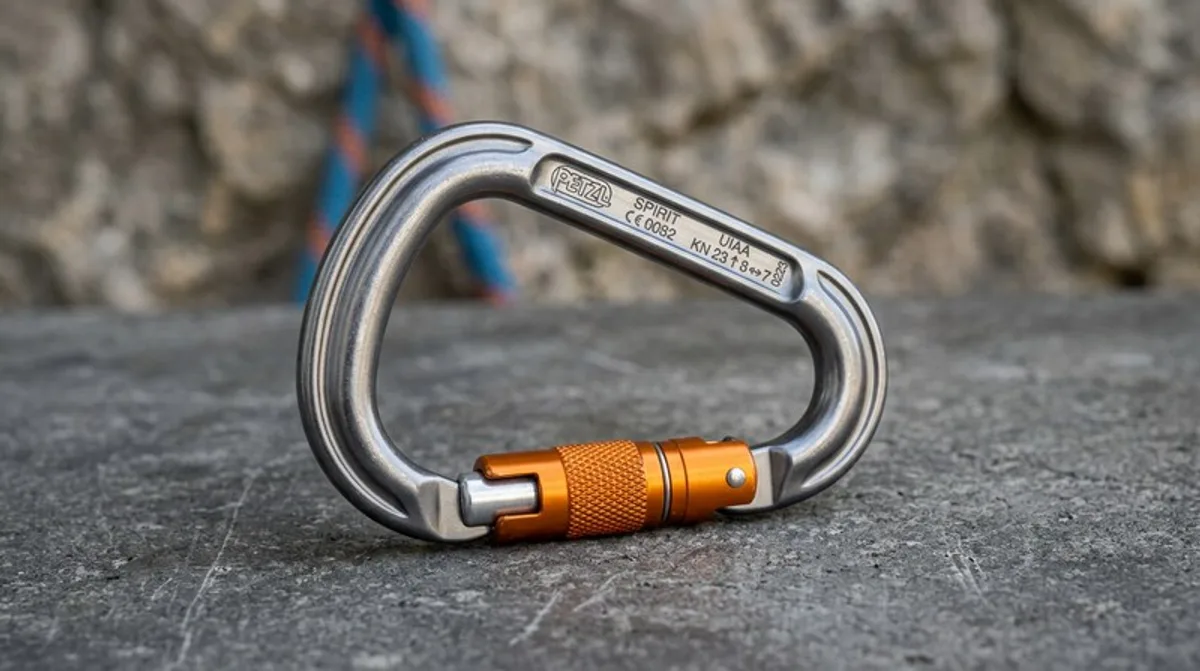
Shapes and functions: There are oval, round, asymmetrical, and special carabiner shapes. Oval carabiners are versatile, while asymmetrical carabiners are often optimized for climbing in routes with transverse movement. Locking and rappelling carabiners have special features, such as an automatic closure that prevents accidental opening. Bouldering carabiners are often narrower and lighter to make gripping and placing easier.
Rope attachment: The correct attachment of the climbing rope is of utmost importance. Special carabiners are used for this purpose, which ensure a secure connection between the rope, the belay device, and the rock. Make sure that the carabiners meet the corresponding standards and are approved for this application.
Belay carabiners vs. rappelling carabiners: Belay carabiners are mainly used to set up the belay in a via ferrata or when sport climbing. They are often equipped with an automatic closure to prevent accidental opening. Rappelling carabiners are specifically designed for rappelling and must have a higher load capacity, as greater forces act here.