Mastering Pull-Ups: Strength Training, Calisthenics & Deals
Pull-ups are a fantastic exercise for your back and grip strength. We'll show you how to master them with strength training and calisthenics, while also taking advantage of our exclusive deals.
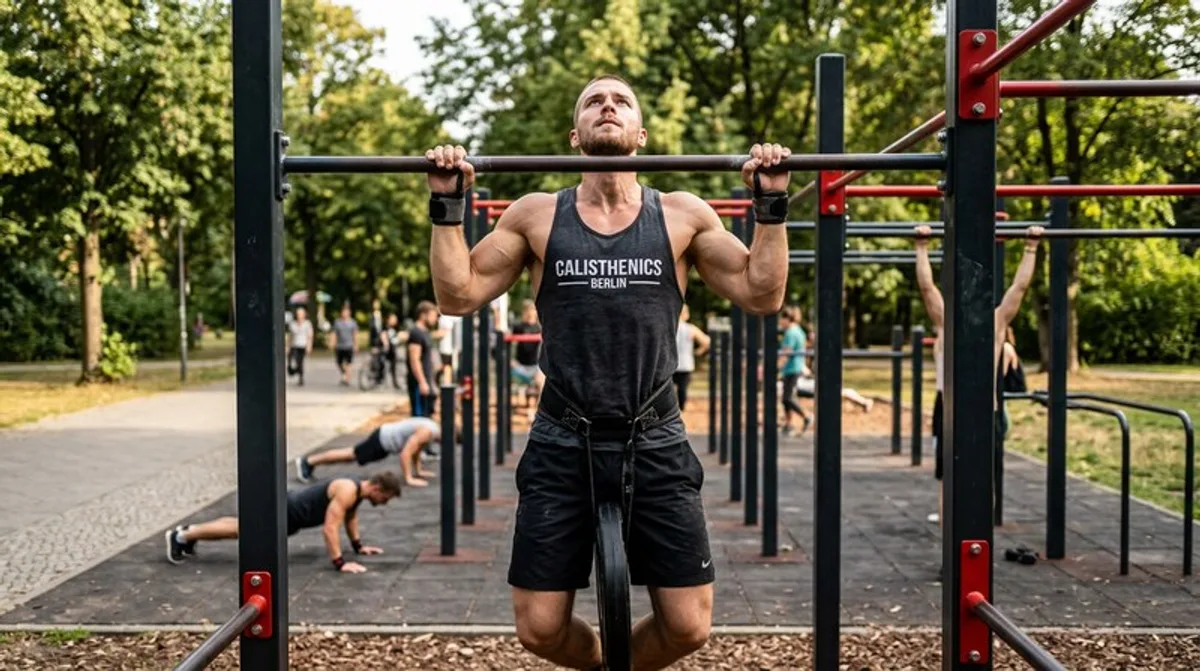
Pull-ups – a true classic in the fitness world. Whether you're dedicated to strength training, perfecting your body control in calisthenics, or simply want to learn an impressive move for your friends: pull-ups are a real game-changer. This blog post explores the connection between strength training, calisthenics, and the pull-up, gives you practical tips, and reveals how you can save money on equipment.
What you should know
The pull-up is more than just an exercise element. It's a complex movement sequence that activates numerous muscle groups – especially the back, arms (biceps and triceps) and shoulders. In strength training, pull-ups are often used as part of a comprehensive training plan to strengthen pulling strength and the upper body. In calisthenics, however, they are central, as a basis for more advanced exercises such as muscle-ups or archer pull-ups. It is important to understand that the pull-up requires progressive overload: you start with a difficulty level that is realistic for you and gradually increase.
The differences in focus:
- Strength training: Here it's often about maximum strength and muscle building. Pull-ups are integrated as one of many exercises in the training plan to improve pulling strength and strengthen the upper body. Other exercises may include bench press, deadlifts, and squats.
- Calisthenics: In calisthenics, functional strength and body control are the focus. The pull-up is a cornerstone, often as a basis for more complex exercises. More emphasis is placed on technique and movement sequence here.
- Pull-up & Calisthenics: The combination of both approaches is ideal for building strength and improving body control. You benefit from the advantages of both training methods.
Difficulty levels: Pull-ups are not just pull-ups. There are different variations that differ in difficulty:
- Negative pull-ups: You jump or stand on a pull-up bar and lower yourself slowly and controlled. Ideal for beginners.
- Assisted pull-ups: You use a resistance band or an assisted pull-up machine to help you pull yourself up.
- Classic pull-ups: You pull yourself up completely until your chin is over the bar.
- Chin-ups: Pull-ups with an underhand grip, which puts more stress on the biceps.
- Archer pull-ups: An advanced variation where you pull yourself up more strongly with one arm than the other.
Practical tips
Mastering your first pull-ups can be a challenge. Here are some tips that can help you:
- Find the right grip: Try different grip w