
Up to 80% off today — Shop all deals Save now

HomeRatgeberWohnen & Einrichten › Composters in the Garden: Save Money with Organic & Sustainable Practices

Composters in the Garden: Save Money with Organic & Sustainable Practices
Wohnen & Einrichten ca. 3 Min. Lesezeit

Composters in the Garden: Save Money with Organic & Sustainable Practices

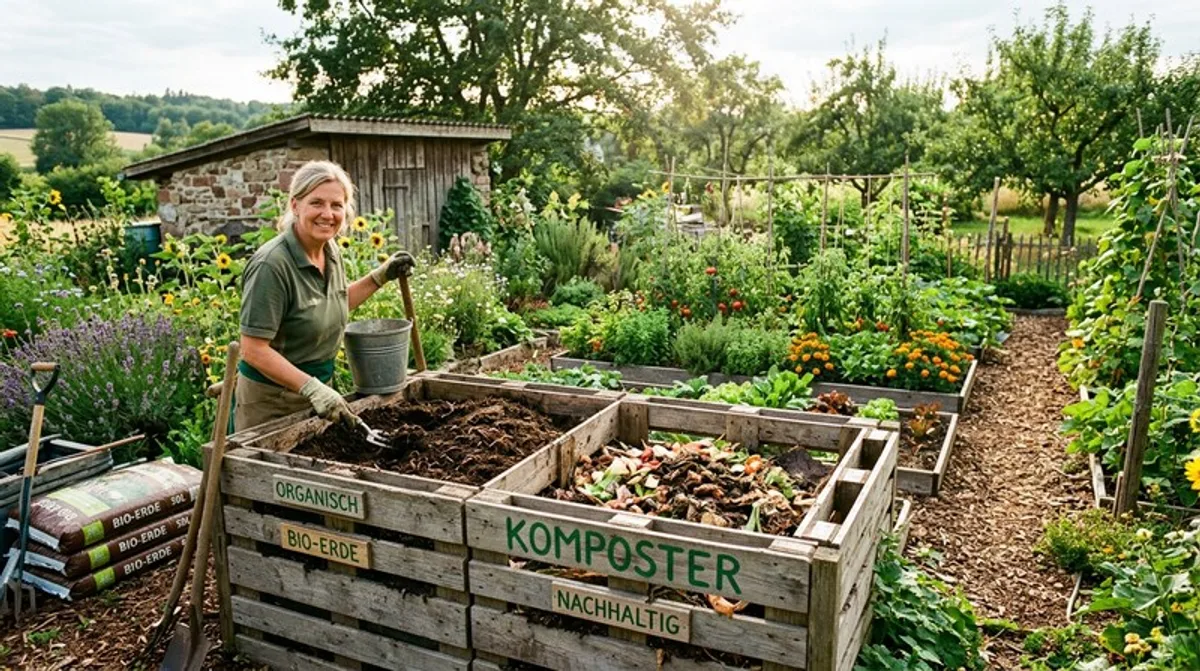
Composting is an easy way to make your garden more sustainable and create valuable humus. At RabattZen, you'll find the best deals on composters of all kinds – from models for balconies to large garden sheds.

Your garden is more than just a patch of green – it's a habitat, an oasis, and an important contribution to sustainability. More and more people want to reduce their ecological footprint and transform their garden into a bio-friendly space. A composter is an indispensable helper that not only reduces waste but also provides valuable fertilizer for your plants. In this blog post, you'll learn everything you need to know about composters in the garden – from selection to optimal use.

What You Should Know

A composter is basically a box or container in which organic waste is decomposed under the influence of microorganisms, fungi, and insects. The result is compost, also called humus – a nutrient-rich soil improver that can give your plants a huge boost. The benefits are obvious: you reduce your waste, save money on fertilizer, and create a valuable habitat for beneficial insects in your garden. But what should you pay attention to when purchasing and using it?

    >The Right Size: The size of the composter depends on the amount of garden waste and kitchen scraps you produce. For a small family, a small composter (approx. 200-500 liters) is often sufficient. For larger gardens or families, a larger composter (over 500 liters) or even several composters is a good idea. >Composter Models: There are various models, from simple wooden boxes to rolling composters and turning composters. Rolling composters are particularly practical because they are easy to move and make turning the compost easier. Turning composters further simplify mixing and aerating the compost. >The Location: Choose a partially shaded, easily accessible location for your composter. Direct sunlight can dry out the compost, while too much shade can slow down the decomposition process. Also, make sure you can easily fill and empty the composter. >The Right Material: Compostable materials include kitchen waste (fruit and vegetable scraps, coffee grounds, tea bags – without paper!), garden waste (leaves, grass clippings, hedge clippings), cardboard, and newspaper (in small amounts). Avoid meat, fish, dairy products, fat, and heavily seasoned foods, as these can attract odors and disrupt the composting process. >The Right Ratio: A good ratio of "green" (nitrogen-rich material such as grass clippings) and "brown" (carbon-rich material such as leaves) material is crucial for a successful composting process. As a rule of thumb: 2/3 "brown" to 1/3 "green".

Practical Tips

Composting is a natural process that requires some patience. Here are some tips to help you speed up the process and avoid problems:

    >Ventilation: Wende
CouponsZen

Never miss a deal again!

Get the best coupons and exclusive offers straight to your inbox — free.