
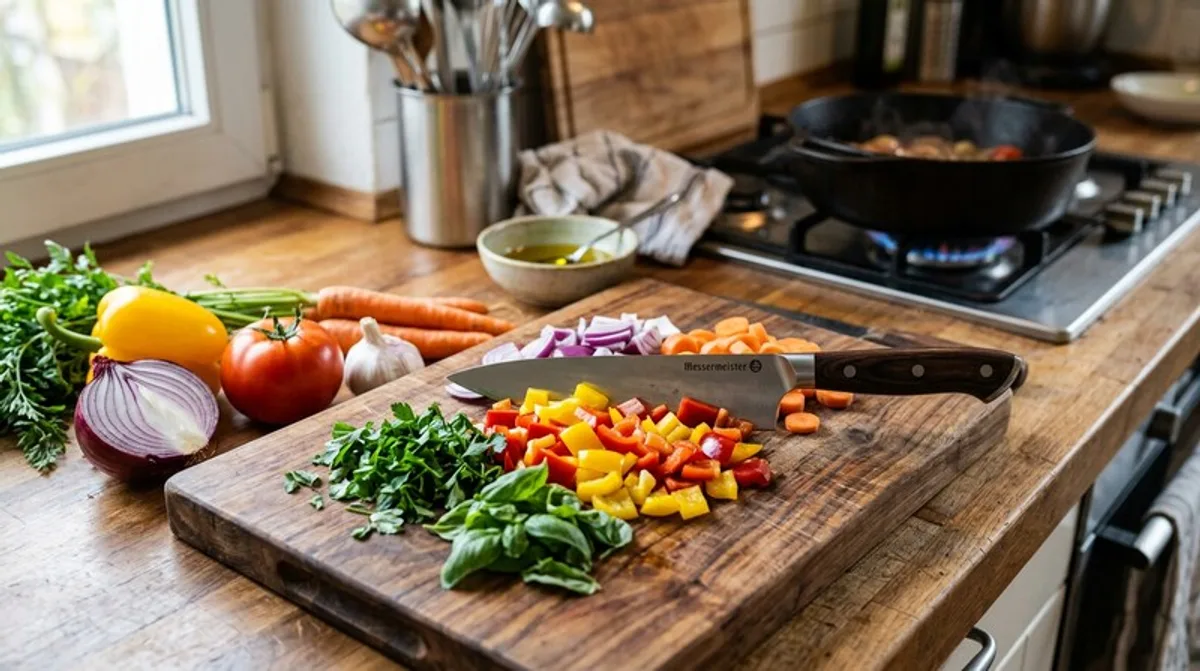
Cutting Boards & Knives: Get the Most Out of Them!
The right cutting boards and knives are essential for preparing delicious meals. Find the best deals with us and save on your purchase!
The perfect vegetable medley or a crispy loaf of bread – the joy of cooking often begins with the preparation. A good cutting board and sharp knives are indispensable helpers. But what should you look for when buying, which wood is best suited, and how do you properly care for your tools? In this blog post, we'll take you on a little discovery journey around cutting boards, knives, and the art of cutting.
What You Should Know
The selection of cutting boards and knives is huge. It's easy to get lost. To make your decision easier, we'll first look at the most important aspects. This starts with material selection. Wood is the classic here and has many advantages, but other materials like plastic or glass also have their place. The hardness of the wood, the type of knife, and of course the care are also important.
Why Wood? Wood cutting boards are not only visually appealing but also offer some practical advantages. They are gentler on knife blades than hard materials like glass or ceramic, which extends the life of your knives. In addition, they dampen the cutting process and prevent the knife from slipping. The natural grain of the wood also provides a good grip when cutting.
Which Wood is the Best? Not all wood is equally suitable. Hardwoods such as beech, maple, cherry, or olive are the most popular options. They are robust, durable, and relatively resistant to cuts and scratches. Olive wood is particularly popular because of its beautiful grain and natural antibacterial properties. Bamboo is a sustainable alternative and is also very popular.
The Importance of Knife Hardness The hardness of a knife is measured on the Rockwell scale (HRC). The higher the value, the harder and longer-lasting the knife. Knives with a hardness between 56 and 60 HRC are ideal for home use. Look for knives made of high-quality stainless steel, as these are generally the most durable.
Practical Tips
A wooden cutting board is more than just a work surface – it's a living object that needs care. Here are a few