
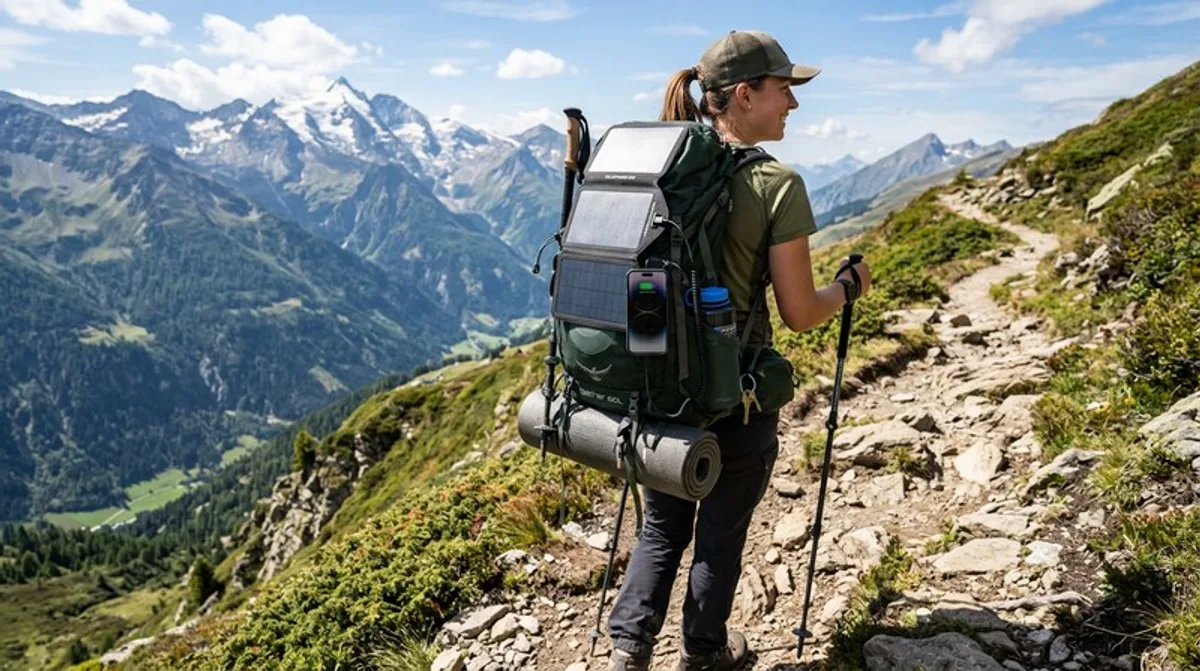
Solar Charging Station Outdoor: Hiking & Power
Never deal with a dead phone on hikes again! Our overview shows you the best solar charging stations for on the go and how you can save money while doing it.
The freedom of hiking, the untouched nature – these are experiences you should treat yourself to again and again. But what about your tech? Smartphone for navigation, camera for the most beautiful moments, maybe even an action cam for breathtaking shots. All of this consumes energy, and who hasn't experienced it: the battery is dead, exactly when you need it most. The solution? A solar charging station for outdoor adventures!
What You Should Know
A solar charging station for outdoor hiking is more than just a luxury; it's a practical necessity for anyone planning longer tours or simply wanting to stay independent. But what should you look for when choosing? There are a number of factors that play a role so you can find the right solution for your needs.
First and foremost, power is crucial. Measured in watts (W), it indicates how much energy the solar panels can generate per hour. 5-10 watts is often enough for smartphones and smaller devices, while action cams and tablets require more power. Also consider the capacity of the integrated battery (if available). This serves as a buffer to store energy when the sun isn't shining or the power is low. Also, pay attention to durability. An outdoor solar charging station must withstand bumps, scratches, and weather conditions. Waterproofing (IP protection class) is an important criterion here.
Another point is portability. You want to be able to easily take it with you. Pay attention to the weight and dimensions. Many models are foldable or can be stored compactly. And finally: What connectors are needed? USB-A is standard, but USB-C is often faster and more efficient for newer devices. Some models even offer multiple ports to charge multiple devices at the same time.
- Power (Watt): Suitable for the needs of your devices.
- Capacity (mAh): Buffer for days without sun.
- Durability (IP protection class): Waterproofing and impact resistance.
- Portability: Consider weight and dimensions.
- Connectors: USB-A, USB-C, or even multiple ports.
- Additional Features: LED lamp, carabiner hook for attachment.
Tips from Practice
Theory is nice, but how do you use a solar charging station in practice? Here are a few tips to make your life easier on the go:
Location is everything: Find a sunny spot. Trees, rocks, or other obstacles cast shadows and reduce efficiency. The more direct the sunlight hits the panels, the better. Rotate the charging station throughout the day to achieve the optimal alignment