
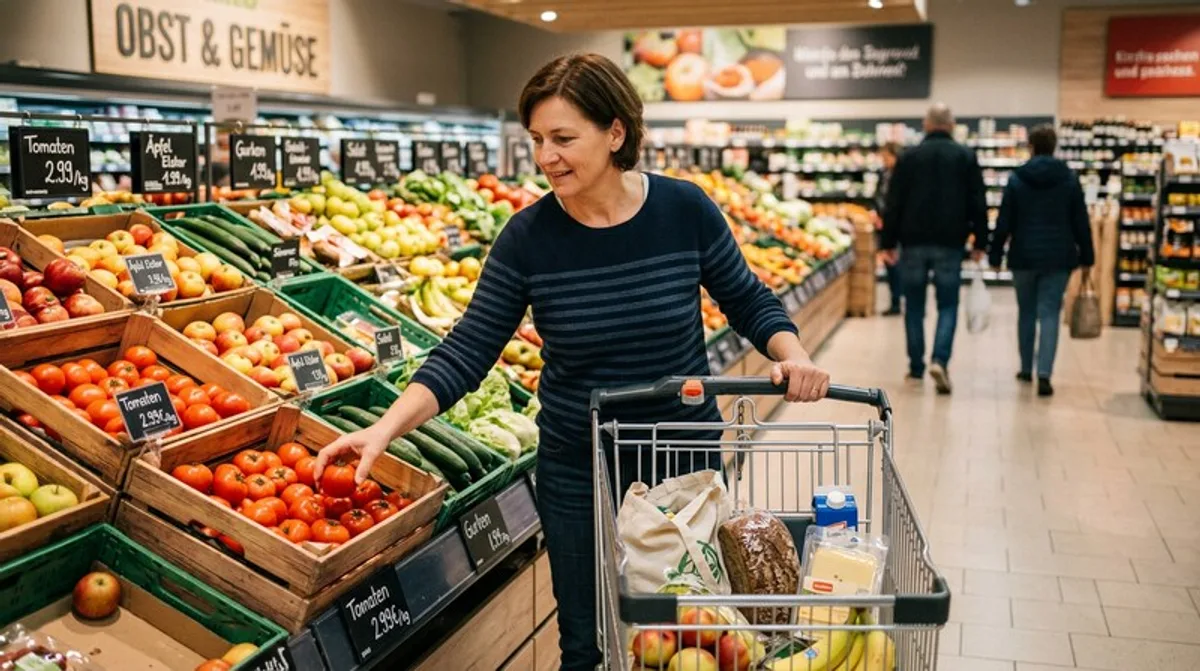
Smart Grocery Shopping: 10 Tips to Reduce Waste
With the right strategy, you can save significantly on your grocery bill. These 10 tips will help you shop more consciously and affordably.
German households spend an average of €350–€600 per month on food — and statistically throw away €83 worth of food each month. With these 10 strategies, you can reduce your grocery bill by 20–30% without sacrificing quality or variety.
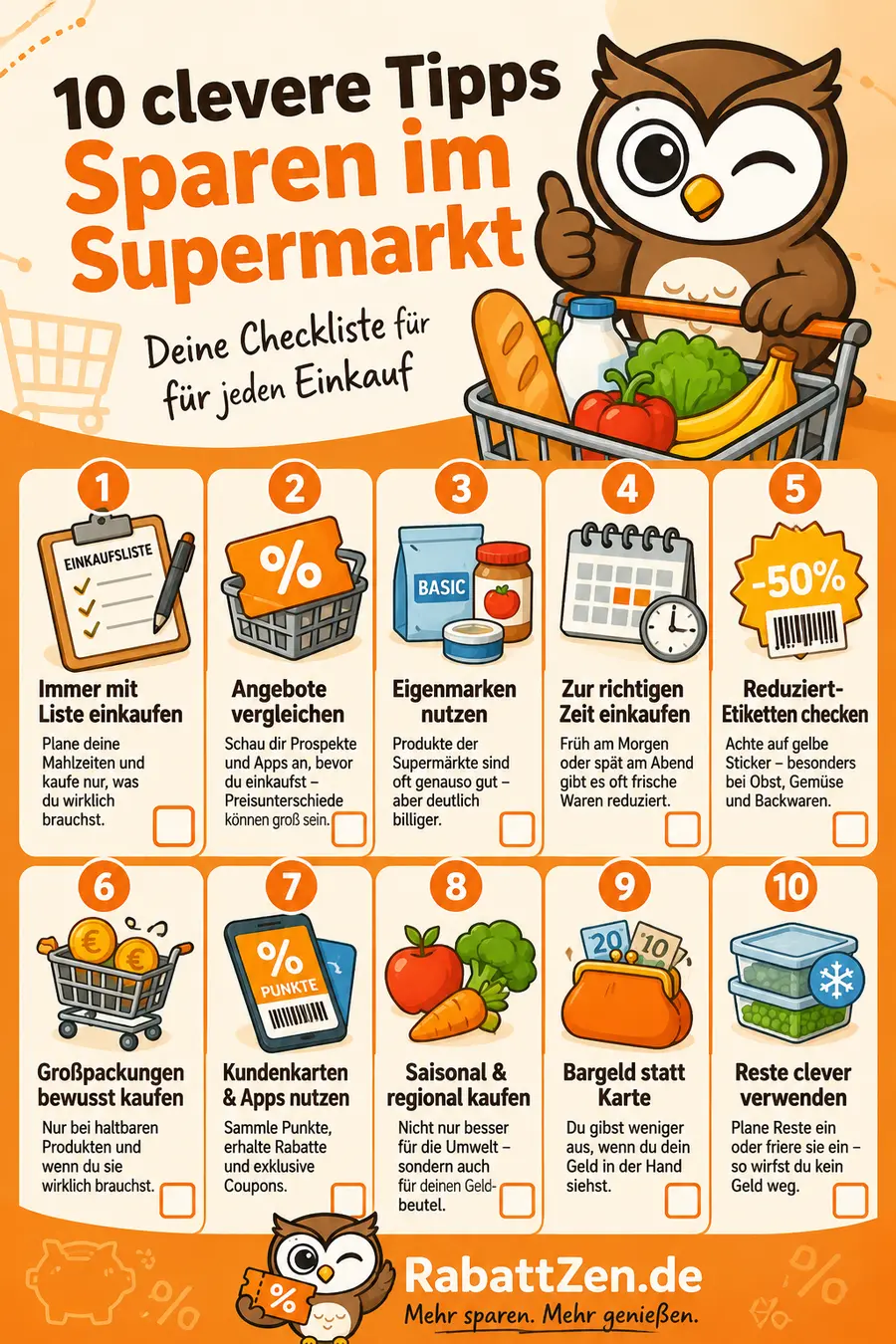
A Cornell study has shown: Shopping when hungry increases spending by an average of 64%. At the same time, people without a shopping list buy 20–30% more than planned — almost exclusively impulse purchases that are more expensive and less healthy. Writing a list in 5 minutes realistically saves €30–€60 per shopping trip with a €200 budget. Apps like
Those who plan 5 dinners for the week buy purposefully — no "I'll also take that with me, I don't know what for." Studies show: Meal planning reduces food waste by 50% and expenses by 15–25%. Time commitment: 15–20 minutes on the weekend. Method: Choose recipes for 5 dishes, and make sure ingredients overlap as much as possible (e.g., chicken breast for two different dishes).
Consumer Reports and Öko-Test have shown in many tests: Store brands (Aldi, Lidl, Rewe-Ja, Edeka-Gut&Günstig) are often just as good or even better than more expensive brand products in quality assessments. The price difference: 30–60%. For a household that spends €300 per month on food and switches half of it to store brands: €45–€90 per month savings.
There is no measurable quality difference with these products: salt, sugar, flour, pasta, rice, frozen vegetables, milk, yogurt, butter, mineral water.
Supermarket employees often reduce items with approaching expiration dates in the morning before the rush. Best times for reduced fresh produce: Monday mornings (weekend stock is sold off), Thursday evenings (before the weekend restocking), and daily shortly before closing time. "Too Good To Save" and the app