
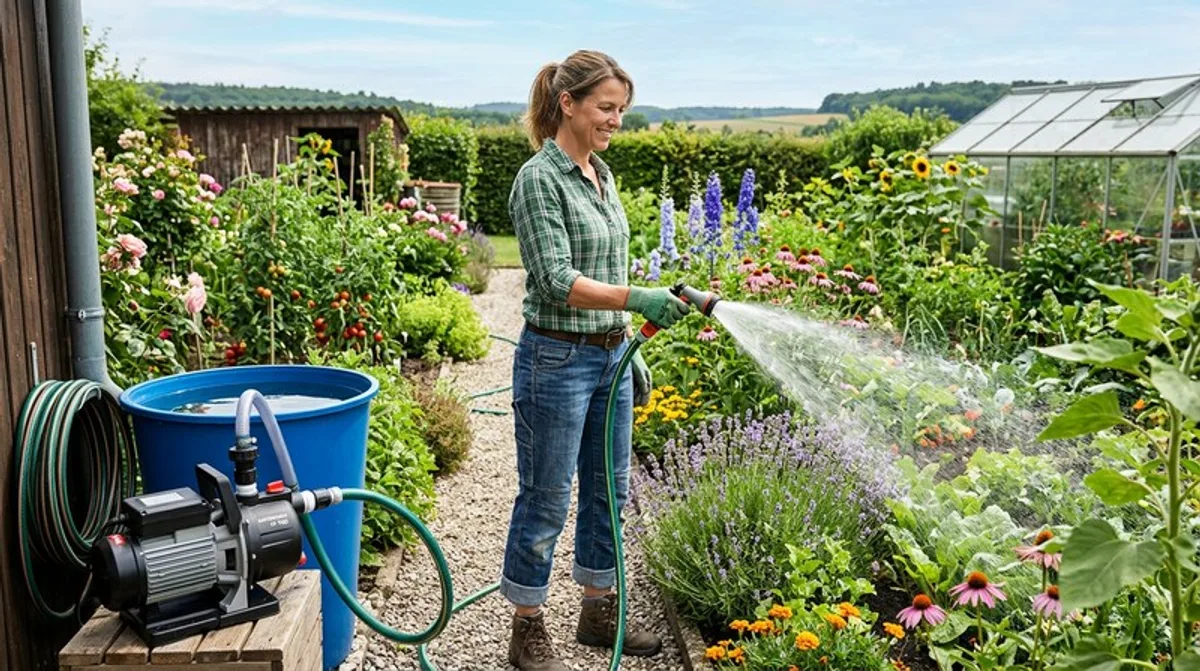
Garden Pump: Water for Gardening – Deals & Tests
Need water for your gardening? We'll show you which garden pump is right for you and where to find the best deals.
Summer is approaching, and so is your plants' thirst! Whether it's a vegetable patch, flower beds, or lawn – a reliable water supply is essential for successful gardening. A garden pump is an indispensable helper for pumping water from wells, cisterns, or rain barrels. In this blog post, we'll cover everything you need to know about garden pumps, from the different types to clever ways to save money.
What You Should Know
Garden pumps are much more than just devices that move water. They're keys to a healthy, flourishing garden. But which pump is right for you? There are essentially two main types: Surface pumps and submersible pumps. Surface pumps sit outside the water and suck the water up. They are often easier to maintain, but have a limited suction capacity (usually a maximum of 8 meters). Submersible pumps, on the other hand, lie in the water and are therefore ideal for deep wells or cisterns, as they directly draw water from the source. The performance of a pump is usually specified in liters per minute (l/m). The larger your garden and the more plants you want to water, the higher the flow rate should be.
An important aspect is also the pressure. Garden pumps generate a certain pressure that is necessary for irrigation. Some pumps have an integrated pressure tank, which stabilizes the pressure and reduces the frequency of pump starts. This not only protects the pump, but also saves electricity.
Materials also play a role. Inexpensive pumps are often made of plastic, while higher-quality models are equipped with stainless steel components. Stainless steel is more durable and corrosion-resistant, which is especially important when using rainwater.
Practical Tips
Gardening with a pump can be easy if you keep a few things in mind. First of all, the installation is crucial. Make sure the suction hoses are airtight and have no air leaks. A filter screen on the suction hose prevents dirt and sand from entering the pump. Regular cleaning is also important. Remove deposits and limescale regularly to maintain the pump's performance and prevent damage. Especially in winter, you should thoroughly drain the pump and store it frost-free to prevent freezing and damage to the components. A pressure reducer can be useful to regulate the water pressure and S