Kitchen Scale for Baking: The Best Deals & Tips
Precise baking starts with the right kitchen scale. Discover the best deals and tips for kitchen scales at RabattZen so your cakes and cookies turn out perfectly every time.
Baking is a wonderful passion that rewards us with delicious aromas and sweet treats. But before the cake goes into the oven, the precise dosage of ingredients is crucial. This is where the kitchen scale comes in – an indispensable tool for every hobby baker and professional. In this blog post, we'll show you why a kitchen scale is so important when baking, what aspects you should consider when choosing one, and how to save money when buying.
What You Should Know
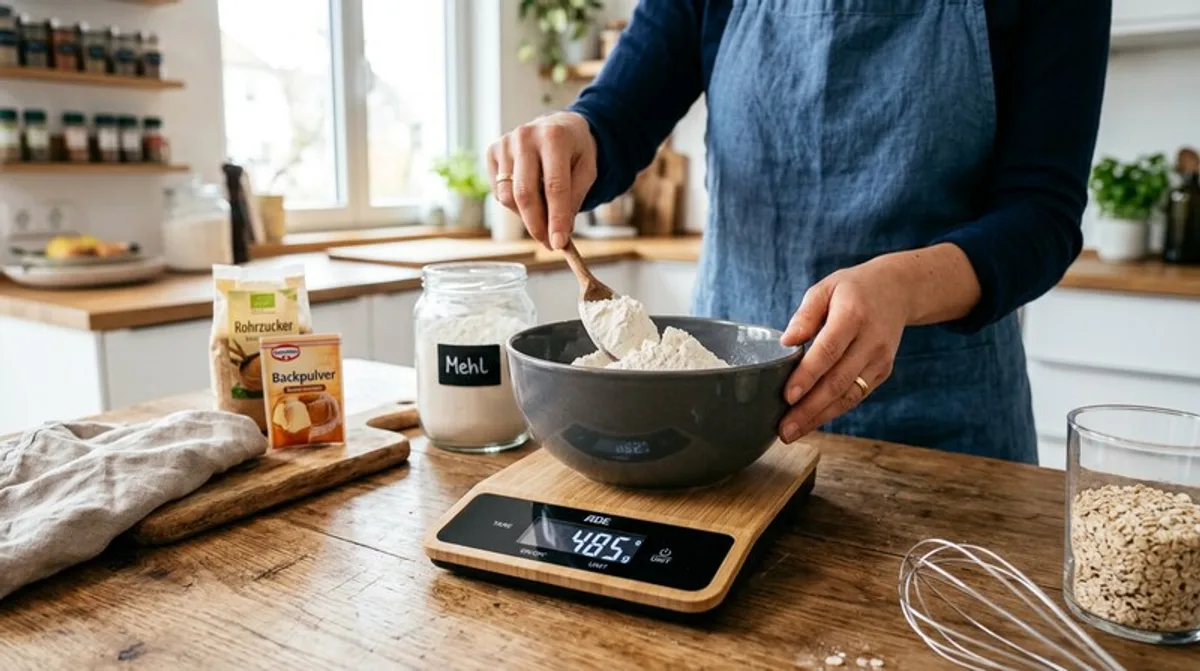
Baking is about precise results. A cake, bread, or sheet cake only turns out perfectly when the ratio of ingredients is right. While measuring cups and spoons can offer a rough guide, they are often inaccurate. A kitchen scale, on the other hand, provides exact measurements in grams, which is essential, especially for baking recipes that place less emphasis on volume. The science behind it is simple: volume measurements (e.g., “150g flour”) can vary depending on the type of flour (smooth or wheat flour type 405) and packaging density. A kitchen scale compensates for these differences and ensures a reproducible result. It's not just about the cake, but also about the joy of baking – and that becomes much greater when the result is perfect every time!
There are different types of kitchen scales. Digital scales are now the most common and offer high accuracy and often additional functions such as a tare button (to zero the scale when adding ingredients to a container) and the ability to convert weight into different units (grams, ounces, etc.). Mechanical kitchen scales are a nostalgic alternative and work on the principle of leverage. They are often more robust and do not require batteries, but are generally less accurate.
Practical Tips
The kitchen scale is more than just a device for weighing ingredients. Here are a few practical tips to make baking easier: