
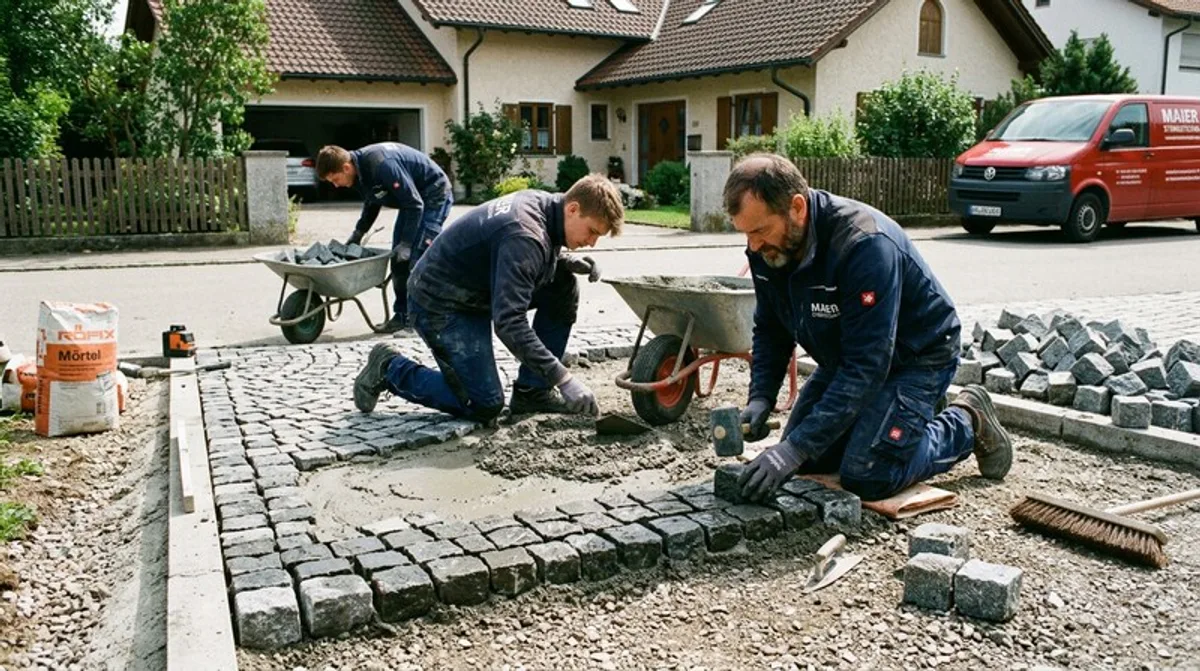
Installing Pavers: Driveway & Costs – Here's How!
Designing a driveway with pavers is a great DIY project. We'll show you the step-by-step process and give you tips on how to save money.
A well-maintained driveway makes a great first impression on your home. Worn or uneven pavers can detract from the overall appearance. In this blog post, we'll explain how to properly install pavers, what to keep in mind, and how to save money – whether for the entire driveway or just a small area.
What You Should Know
Installing pavers is a challenging project that requires some handyman skills. It's more than just laying the stones. Solid preparation is crucial for a durable and visually appealing result. The right choice of base and proper installation are essential to avoid settling, cracks, or uneven surfaces later on. Before you start, you should research the different types of pavers – whether it's lawn pavers, concrete pavers, cobblestone, or natural stone. Each type has its advantages and disadvantages in terms of appearance, durability, and maintenance.
- Building Permit: Check whether a building permit is required for installing the pavers. This depends on the size of the area and local building codes.
- Prepare the Base: The base must be stable and level. First, remove the old surface. Then, install and compact a base layer of gravel (e.g., 0/32). A layer of crushed stone (e.g., 1/3) is then added for aligning the pavers.
- Choose Pavers: Pay attention to the quality and size of the pavers. The size should suit your house and surroundings. Also, consider the color and surface.
- Correct Installation Technique: There are various installation techniques, such as the offset technique (slanted arrangement of stones for a joint-rich pattern) or the four-part technique (a regular pattern). Choose a technique that you like and can implement.
- Fill Joints: After installation, fill the joints with jointing sand or paver joint mortar. This prevents weeds from growing and prevents the pavers from shifting.
Practical Tips
Installing pavers is not a sprint, but a marathon. Take your time and work carefully. Here are a few practical tips to make your work easier:
- Tools: Get a few helpful tools like a straightedge, a rubber roller, a joint raker, and a level. These tools make the work easier and ensure a professional result.
- Alignment: Pay attention to the even alignment of the pavers. Use the straightedge to lay the stones in a straight line.
- Joint Width: