
Memory Card Guide: SD, microSD & Choosing the Right One
Looking for the right memory card for your camera or smartphone? This guide explains the differences between SD, microSD, SDHC, and SDXC and helps you make the right choice.
Memory cards are an indispensable part of our digital lives. Whether for your camera, smartphone, or drone – they store our most precious memories and important data. However, the selection is huge, and the many different designations like SD, microSD, SDHC, and SDXC can quickly be confusing. This guide helps you keep track and find the right memory card for your needs.
What You Should Know
Before you dive into the details, it's important to understand the basics. The term "SD card" is actually an umbrella term. It encompasses various formats and capacities. Let's take a closer look at the most important ones:
- SD (Secure Digital): The original SD card, now rather rare as it has a limited capacity (up to 2 GB).
- SDHC (Secure Digital High Capacity): Offers a higher storage capacity (2 GB to 32 GB) and is widely used in older devices. Make sure your device supports SDHC, as older devices may have compatibility issues.
- SDXC (Secure Digital Extended Capacity): The evolution of SDHC, with even greater capacity (32 GB to 2 TB). SDXC cards are now the standard for many cameras and smartphones.
- microSD: A smaller variant of the SD card, mainly used in smartphones, tablets, action cameras, and drones. microSD cards can be converted to a standard SD card format using an adapter.
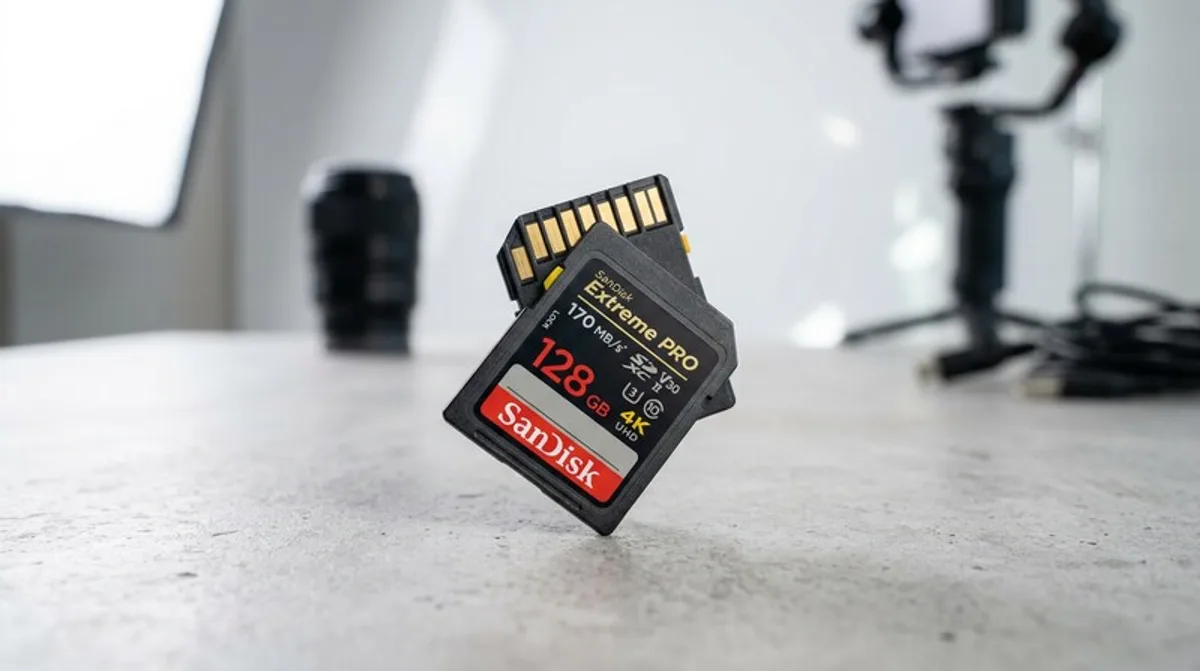
Besides the format, the speed is also a crucial factor. This is indicated in classes such as "Class 10," "U1," "U3," or "V" values (Video Speed Class). The higher the class or V value, the faster the data transfer. For photos, Class 10 or U1 is usually sufficient. For video recordings in high resolution (4K, 8K), however, you need a card with at least U3 or a higher V value to avoid stutters and data loss. The capacity depends on your needs. Photographers who take many photos in RAW format, or videographers who shoot 4K or 8K videos, generally need larger cards (64 GB, 128 GB or more). For everyday use with a smartphone and occasional snapshots, a 32 GB card is often sufficient.
Another important aspect is the security level. Memory cards may be available in different security levels that protect against unauthorized access to the stored data. This is particularly relevant if you store sensitive data such as personal photos or documents.
- Check Compatibility: Make sure your device supports the chosen format (SDHC, SDXC, or microSD).
- Consider Speed: Choose a card with the appropriate speed for your application (photo, video, action ca