
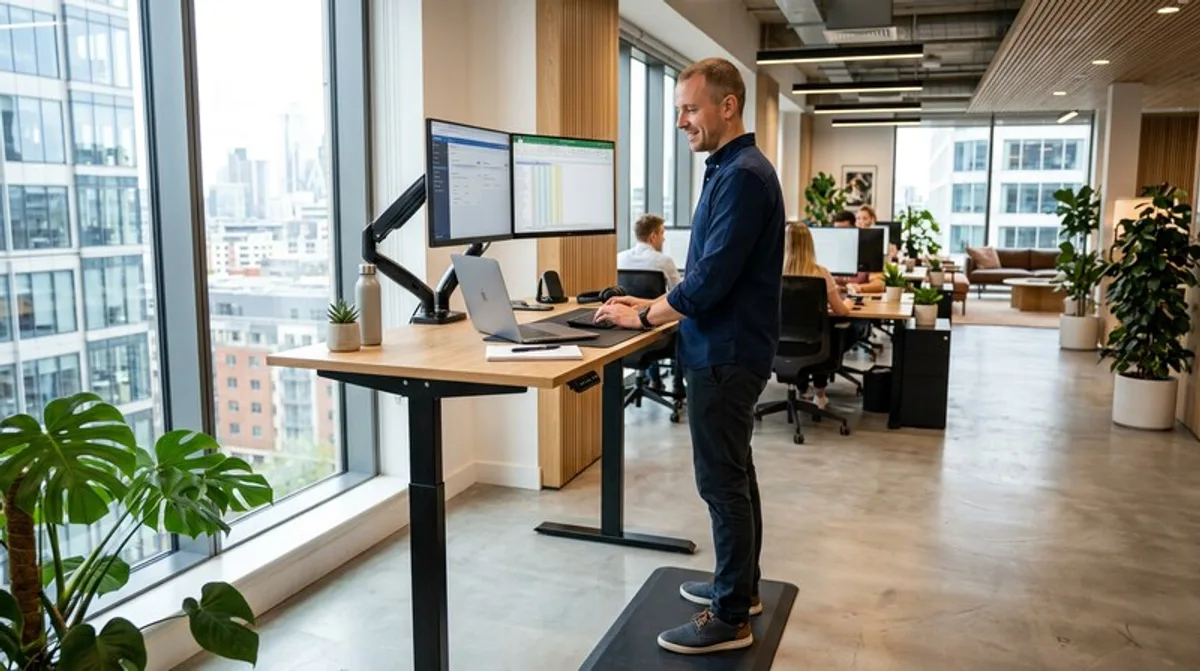
Standing Desk Office: Ergonomic, Back-Friendly & Deals
Standing desks are becoming increasingly popular to prevent back pain and change the way you work. Discover our best standing desk deals now and create an ergonomic office environment.
The world of work is constantly changing, and with it, our needs for the workplace. More and more people are looking for ways to make their daily lives more ergonomic and healthier. A standing desk in the office is often a central solution – not just a trend, but an investment in your health and well-being. In this blog post, you'll learn everything important about standing desks, from the benefits for your back to clever money-saving tips.
What you should know
A standing desk, also called an adjustable-height desk, allows you to switch between sitting and standing while working. This dynamic way of working has numerous positive effects, especially on your back. Prolonged sitting can lead to tension, back pain, and poor posture. A standing desk promotes movement, strengthens muscles, and improves circulation – all of which contributes to a healthier back. But what should you pay attention to when choosing and setting it up?
The right height is crucial: Your elbow should be bent at a 90-degree angle when you type. The upper edge of the desk should therefore be approximately at the height of your wrists. Many standing desks are continuously height-adjustable, which allows for individual adjustment. Also, pay attention to the maximum height, especially if you are tall.
More than just a desk: A standing desk is only part of the ergonomic solution. A well-adjustable office chair, a monitor at eye level, and an ergonomic keyboard and mouse are also important to ensure an optimal posture.
Start slowly: Don't stand all day right away! Begin with short standing phases of 15-30 minutes and gradually increase the duration. Your body needs time to get used to the new way of working.
- Ergonomics Check: Check your work environment for ergonomic weaknesses.
- Height Adjustability: Pay attention to a large height adjustment range to ensure optimal adaptation.
- Stability: A wobbly standing desk can be tiring. Choose a model with good stability.
- Materials: Pay attention to high-quality materials and robust construction.
- Accessories: Supplement your standing desk with an ergonomic foot mat and possibly an anti-fatigue mat.
Practical Tips
Many people report initial exertion when they first use a standing desk. Here are some tips to make the transition as pleasant as possible:
- Switch between sitting and standing: Take advantage of the ability to switch between sitting and standing. This avoids one-sided stress.
- Incorporate movement: Do short stretches or take a few steps to stimulate circulation.