
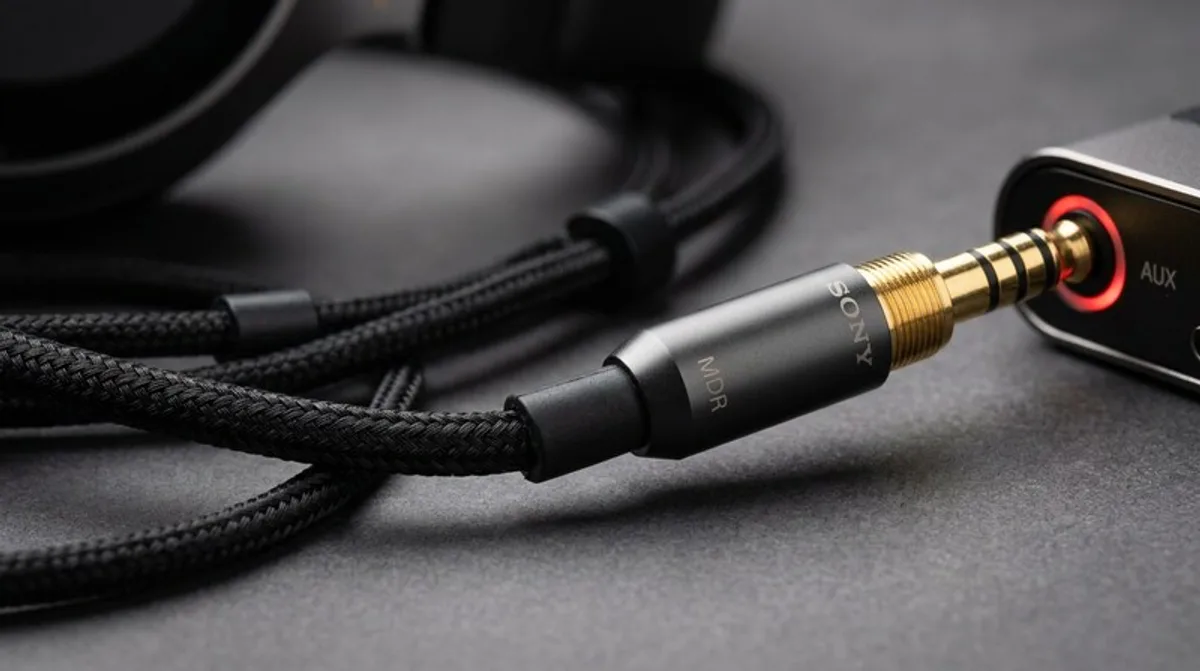
Headphone Cables: Audio Cables, Replacements & Accessories
A defective or missing cable can ruin your listening experience. We'll show you where to find affordable replacement cables for your headphones, audio cables, and accessories, and which factors are important when choosing.
Headphones are long more than just a way to listen to music. They're a personal statement, a tool for concentration, and for many audiophiles, an essential part of the sonic aesthetic. But what if the cable breaks or the sound isn't optimal? That's where headphone cables come in – an often underestimated, but crucial accessory. This article explores the world of audio cables, replacement cables, and accessories around your headphones.
What You Should Know
A headphone cable is more than just a wire that connects your headphones to the audio source. It's a transmission channel that carries the signals and thus significantly influences the sound. The quality of the cable, the materials used, and the workmanship all play a role. Especially with high-quality headphones, such as studio or HiFi models, a better cable can make the difference between good and excellent sound. There are different types of cables designed for different needs. While simple replacement cables for in-ear headphones are often sufficient, over-ear headphones benefit from specially designed audio cables.
Different Cable Types and Connectors: There are cables with different connectors, such as 3.5 mm jack, 6.3 mm jack, XLR, and USB-C. The choice of the right connector depends on your audio source and your headphones. Studio headphones often use XLR connectors, while HiFi headphones often use 3.5 mm or 6.3 mm jacks. In-ear headphones usually use 3.5 mm jacks or USB-C.
Materials and Their Effects: The quality of the cable depends heavily on the materials used. Copper is the most commonly used material, but there are different types of copper such as oxygen-free copper (OFC) or silver-plated copper. Silver-plated copper often offers better signal transmission and clearer sound. The insulation of the cable also plays a role. Good insulation minimizes noise and ensures clean signal transmission. Some cables also use special materials like Kevlar to increase cable breakage resistance.
- Check Compatibility: Make sure the replacement cable is compatible with your headphone model. The length of the cable is also important.
- Note Connector Types: Make sure the cable has the right connector for your audio source (e.g., 3.5 mm, 6.3 mm, XLR).
- Consider Material Quality: If you value sound quality, look for cables with high-quality materials such as oxygen-free copper (OFC) or silver-plated copper.
- Cable Breakage Resistance: Consider whether you want a cable with Kevlar reinforcement to make it more resistant to damage.
- Audiophile Cables: For audiophile A