
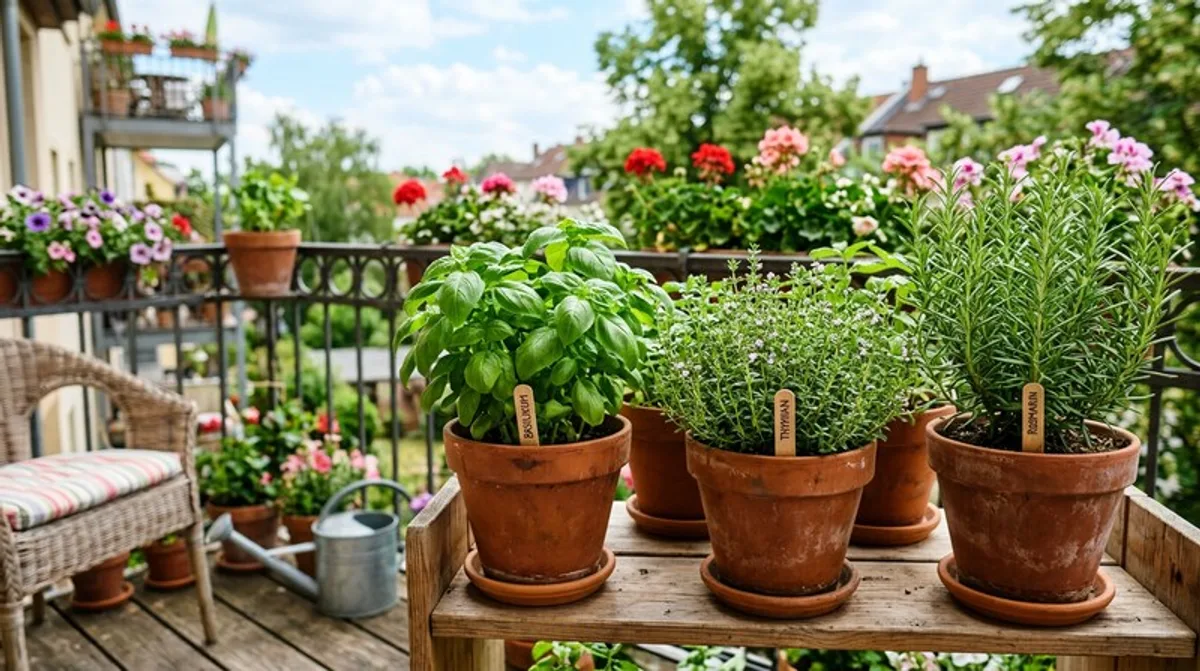
Herbs on Your Balcony: Basil & Thyme Tips
Balcony herbs not only delight with flavor but also beautify your balcony. We'll show you how to successfully grow and care for basil, thyme, and other herbs.
The scent of fresh herbs wafting on your balcony – is there anything nicer? Having your own herb garden on the balcony is a delight for the senses and a great way to have fresh ingredients for the kitchen always at hand. In this blog post, we'll focus on two particularly popular herbs: basil and thyme. We'll give you tips on how to successfully grow and care for them on your balcony.
What You Should Know
Before you dive into growing basil and thyme, there are a few important things to keep in mind. Both herbs have different needs, so it's important to understand them to provide them with the best possible conditions. Basil loves warmth and sun, while thyme is a bit more tolerant of cooler temperatures. Soil and watering also play a crucial role in the success of your herbs.
- Location: Basil needs a sunny and warm location. Thyme also prefers sun, but can tolerate some partial shade. Make sure the location is sheltered from the wind, especially for basil.
- Soil: Both herbs like well-draining, humus-rich soil. Basil prefers a slightly moister soil than thyme. A special herb soil mix from the garden center is ideal.
- Watering: Basil should be watered regularly, especially in summer. Avoid waterlogging! Thyme can cope with less water and tolerates dryness better.
- Fertilizing: A light fertilization during the growing phase is recommended. Use an organic liquid fertilizer to boost growth.
- Pests: Watch out for pests like aphids or whiteflies. Natural pest control products can help in case of infestation.
Practical Tips
Growing basil and thyme on the balcony is easier than you think. Here are a few practical tips to sweeten your success:
Basil: Basil is a “temperature-dependent” herb. If it gets too cold, it can turn yellow or the leaves can fall off. Protect it from cooler temperatures, e.g. with fleece. Harvest the upper leaves regularly to stimulate growth and prevent flowering. Flowers prevent the formation of new leaves and change the taste. Basil is also easy to propagate if you always need fresh plants. A small bowl of water is often enough to preserve the roots.
Thyme: Thyme is hardier and tolerates dryness better than basil. It's also a great insect magnet! Ensure good ventilation to prevent fungal infections. Thyme can also be used as a ground cover to visually enhance the balcony. A cutback after flowering promotes ei