
Smart Thermostat: Save on Heating Costs with Display & More
Smart thermostats are revolutionizing heating technology and enabling efficient control. With a display, you always have an overview and save money.
Heating costs have steadily increased in recent years and are burdening many household budgets. But what if there was a way to reduce these costs without sacrificing comfort? Smart thermostats are the answer – they offer not only intelligent heating control but also intuitive operation via a display and the ability to optimize heating patterns. In this blog post, you'll learn everything you need to know about smart thermostats, from basic functions to practical money-saving tips.
What You Should Know
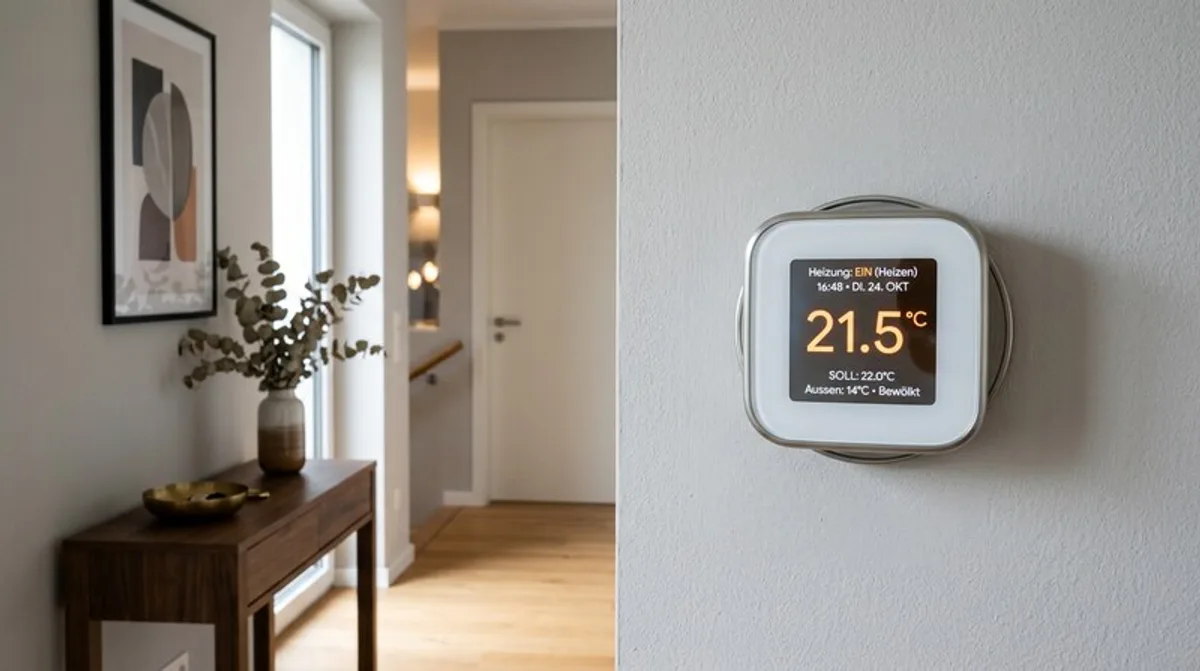
A smart thermostat is essentially an evolution of the traditional thermostat. While traditional thermostats often only offer manual temperature control, smart thermostats bring a range of intelligent functions with them. These functions include remote control via an app, the creation of heating schedules, automatic adjustment to your habits, and even integration into smart home systems. The integrated display provides a clear representation of the current temperature, the set target temperature, and the heating status. Many models also display additional information such as the outside temperature or current energy consumption.
The benefits of a smart thermostat are diverse. In addition to the potential reduction in heating costs (up to 30% is realistic!), you can significantly increase the comfort in your home. You have control over your heating at any time, no matter where you are. And the intelligent functions, such as automatic detection when no one is home, ensure that you save energy without sacrificing warmth. A good display makes operation intuitive and allows you to easily control the heating even without using the app.
There are different types of smart thermostats. Some models are supplied with a separate display, while others have the display directly integrated into the device. The type of installation also plays a role. Most smart thermostats are easy to install yourself, but for older heating systems or more complex systems, it may be necessary to hire a professional. When purchasing, check the compatibility with your heating system – most models are compatible with the most common systems.