
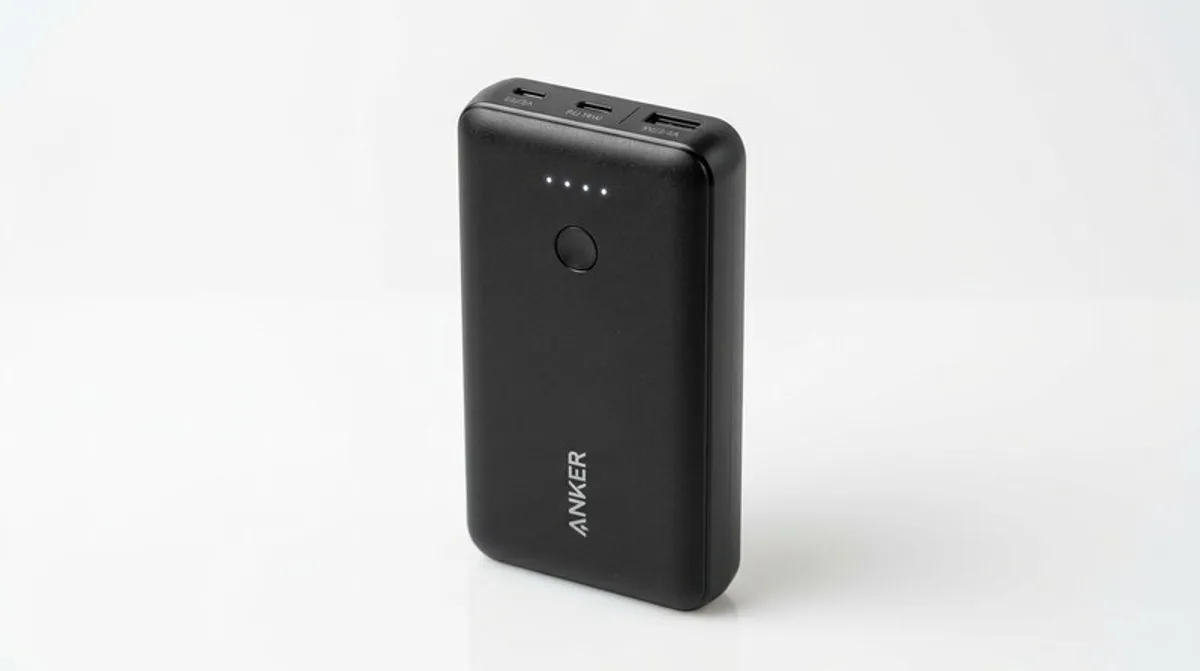
Power Banks: The Best Deals & Reviews for On the Go
Never worry about a dead battery again! Our guide helps you find the perfect power bank for your needs – whether for travel, outdoor adventures, or as a gift.
Is your smartphone battery constantly on the edge? Do you fear losing connection while on vacation or during an outdoor adventure? Then you're in the right place! This blog post is all about power banks: what they can do, what to look for when buying, and how to find the best deals. We'll explore the different types, functions, and benefits so you can find the perfect power bank for your needs – whether for everyday use, travel, or as a great gift.
What You Should Know
A power bank, also known as a battery charger or travel battery, is essentially a portable battery that you can use to charge your electronic devices when there's no outlet nearby. They're an essential companion for anyone who's frequently on the go or simply wants to eliminate the fear of a dead smartphone battery. The technology behind them is relatively simple: the power bank stores electrical energy and then releases it to your devices when needed. But there are some important differences and aspects to consider when making a purchase.
Capacity: Capacity is measured in milliampere-hours (mAh). The higher the mAh number, the more charges you can pack into your devices. A smartphone battery typically has between 2000 and 5000 mAh. A power bank with 10,000 mAh can generally fully charge two to three smartphones.
Output Power: Output power (in watts, W) determines how quickly your devices will charge. Modern smartphones and tablets often support fast charging technologies like Quick Charge or Power Delivery (PD). Make sure the power bank supports these technologies to utilize the full charging speed. A power bank with fast charging is especially practical when you're short on time.
Ports: Most power banks have USB-A ports, but more and more models also offer USB-C ports, which can be used to charge both the power bank itself and your devices. USB-C is often faster and more flexible.
Size and Weight: A portable power bank should be light and compact enough to comfortably fit in your pocket or backpack. Size and weight are a compromise between capacity and portability. Outdoor batteries are often more rugged and waterproof, but can also be a bit larger and heavier.
Safety: Look for power banks with built-in protection mechanisms against overcharging, short circuits, and overheating. Good quality is crucial here to avoid damage to your devices.
- Check the Capacity: How many charges do you need for your smartphone or tablet?
- Look for Fast Charging Technology: Do your devices support Quick Charge or Power Delivery?
- Consider the Size un