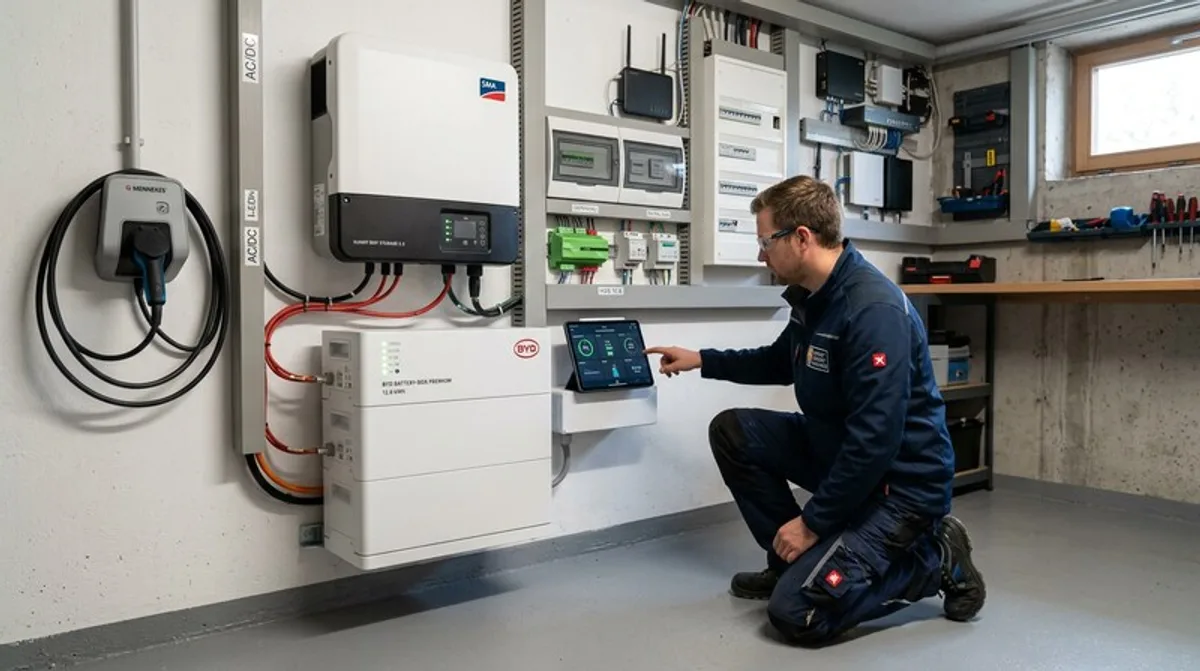
Energy storage systems enable the use of self-generated solar power and reduce electricity costs. Combined with a smart home system, they increase the comfort and energy efficiency of your home.
The energy transition is on everyone's mind, and rising electricity prices make it all the more urgent to look for alternatives. Energy storage and smart home technologies are no longer a thing of the future, but offer concrete ways today to optimize your own energy consumption and become more independent from energy providers. This blog post explains what you should know about energy storage, batteries, and their integration into your smart home.
What You Should Know
Energy storage systems, often referred to as battery storage, are essentially large batteries that can store excess electricity from renewable energy sources (such as photovoltaic systems) or from the power grid. This stored electricity can then be used later when little electricity is being generated or when electricity prices are particularly high. Combining them with a smart home system makes things even smarter, as the use of electricity can be automated and optimized.
Why an Energy Storage System? The advantages are obvious: reduction of electricity costs, increased independence from energy providers, contribution to stabilizing the power grid, and a more sustainable energy supply. Energy storage systems are particularly interesting for homeowners with photovoltaic systems, as they can significantly increase the self-consumption of the generated electricity. Instead of having to feed the self-generated electricity into the grid at a dumping price, it can be used for your own needs.
Battery Types: There are different types of battery technologies. Lithium-ion batteries are currently the most common option due to their high energy density, long lifespan, and relatively small size. Lead-acid batteries are a cheaper alternative, but have a shorter lifespan and are heavier. New technologies such as solid-state batteries promise even better performance and safety in the future.
Smart Home Integration: The really exciting development is the integration of energy storage systems into smart home systems. This enables intelligent control of energy consumption. For example, the smart home system can automatically charge the energy storage system when the photovoltaic system generates electricity and electricity prices are low, and use the stored electricity when the sun isn't shining or electricity prices are high. Intelligent algorithms can analyze the house's electricity consumption and optimize the charging and discharging process of the energy storage system to achieve maximum savings. Charging electric cars can also be seamlessly integrated into this optimization.
Analyze Energy Needs: Before you buy an energy storage system, you should carefully analyze your annual electricity consumption.Check Photovoltaic System: The size of the photovoltaic system